
Equitest's Modules
40 Pages. 40 Chapters.
Zero Guesswork.
Equitest delivers the industry's most comprehensive business valuation reports, blending AI precision with CFA-validated methodologies.

The Complete Report, Chapter by Chapter
Every valuation we deliver follows the same disciplined architecture, eight modules and forty chapters, ensuring complete transparency and compliance across every analytical dimension.
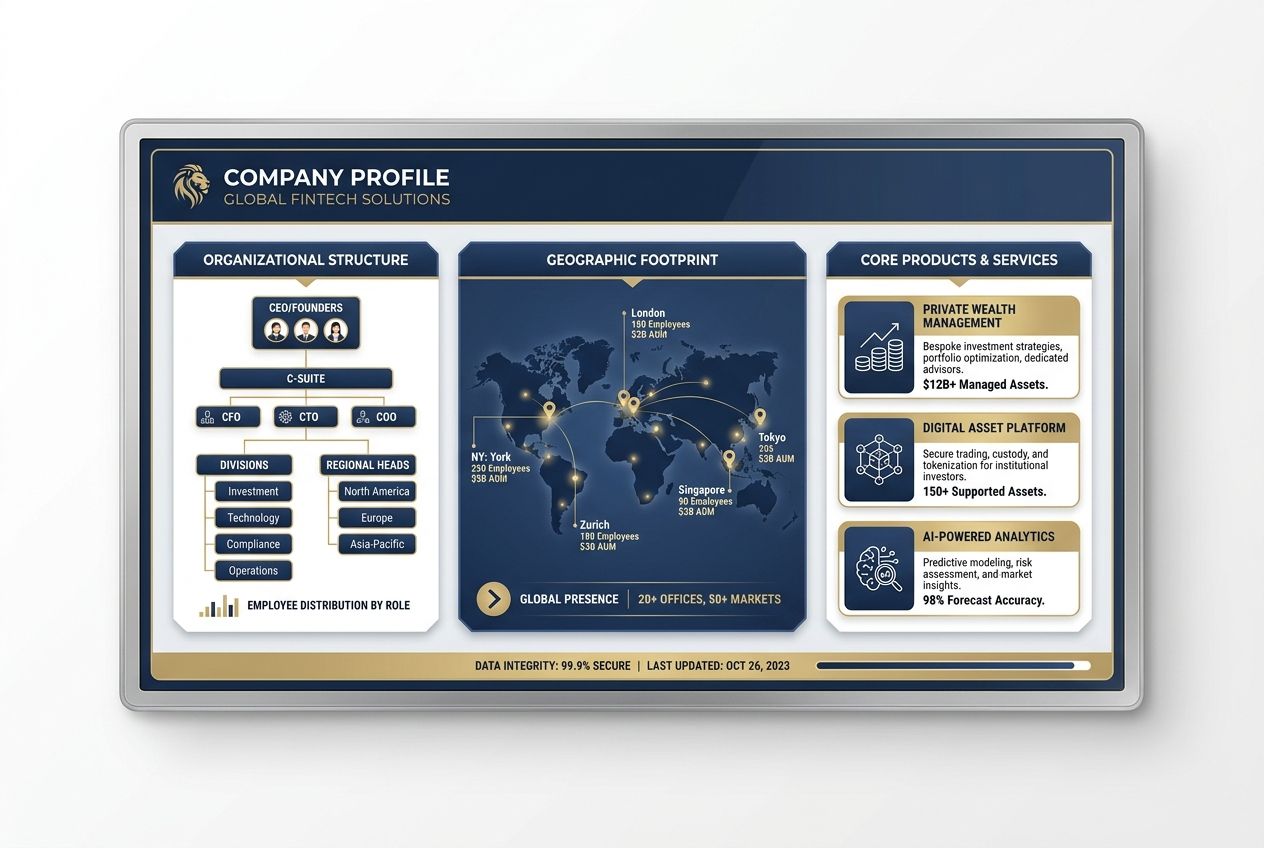
Company Profile (Ch. 1-3)
Foundational data establishing the entity's legal structure, operational history, and core value proposition.
High-level synthesis of valuation results and key investment considerations.
Detailed history, ownership structure, and organizational milestones.
Analysis of revenue streams, product lifecycle, and market positioning.
Strategic & Market Analysis (Ch. 4-7)
External environment assessment focusing on competitive dynamics and macroeconomic tailwinds.
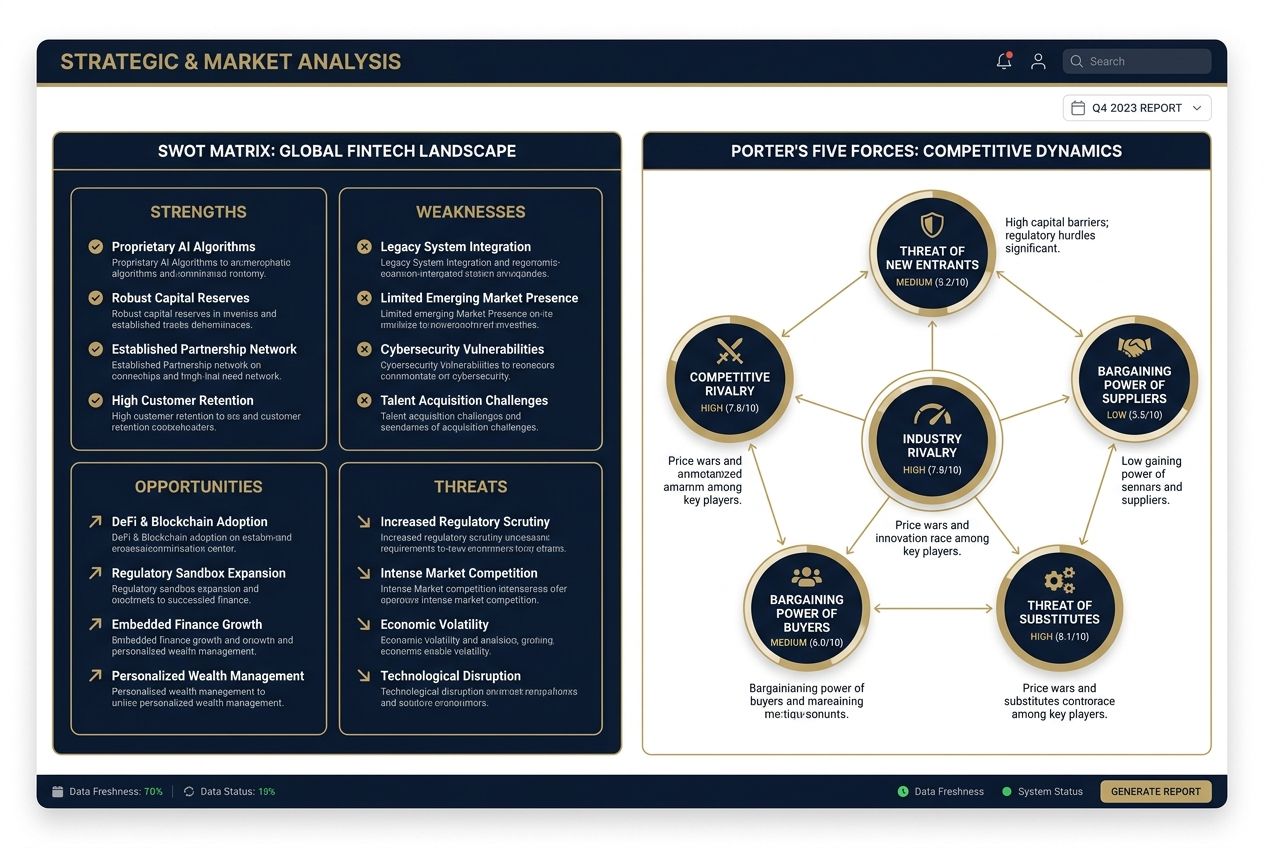
SWOT Analysis
Internal strengths and weaknesses vs. external opportunities and threats.
Market Analysis
TAM/SAM/SOM evaluation and industry growth trajectory modeling.
Porter's 5 Forces
Structural analysis of industry profitability and competitive intensity.
Comparable Cos.
Benchmarking against public peers and recent private transactions.
Financial Analysis (Ch. 8-12)
Quantitative audit of historical performance, liquidity ratios, and solvency metrics.
Three-statement historical review and normalization adjustments.
Common-size statement analysis to identify cost structure trends.
Liquidity, efficiency, and profitability ratio benchmarking.
Decomposition of ROE into operational and financial components.
Probabilistic assessment of financial distress and bankruptcy risk.
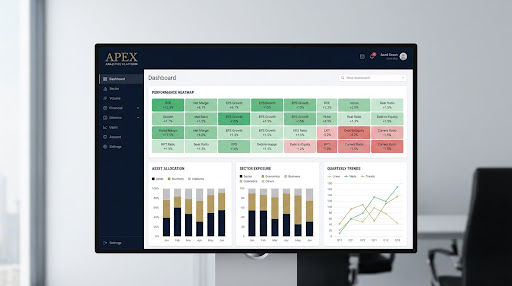
Valuation Multiples (Ch. 13-19)
Market-based valuation approach utilizing industry-specific earnings and revenue multiples.
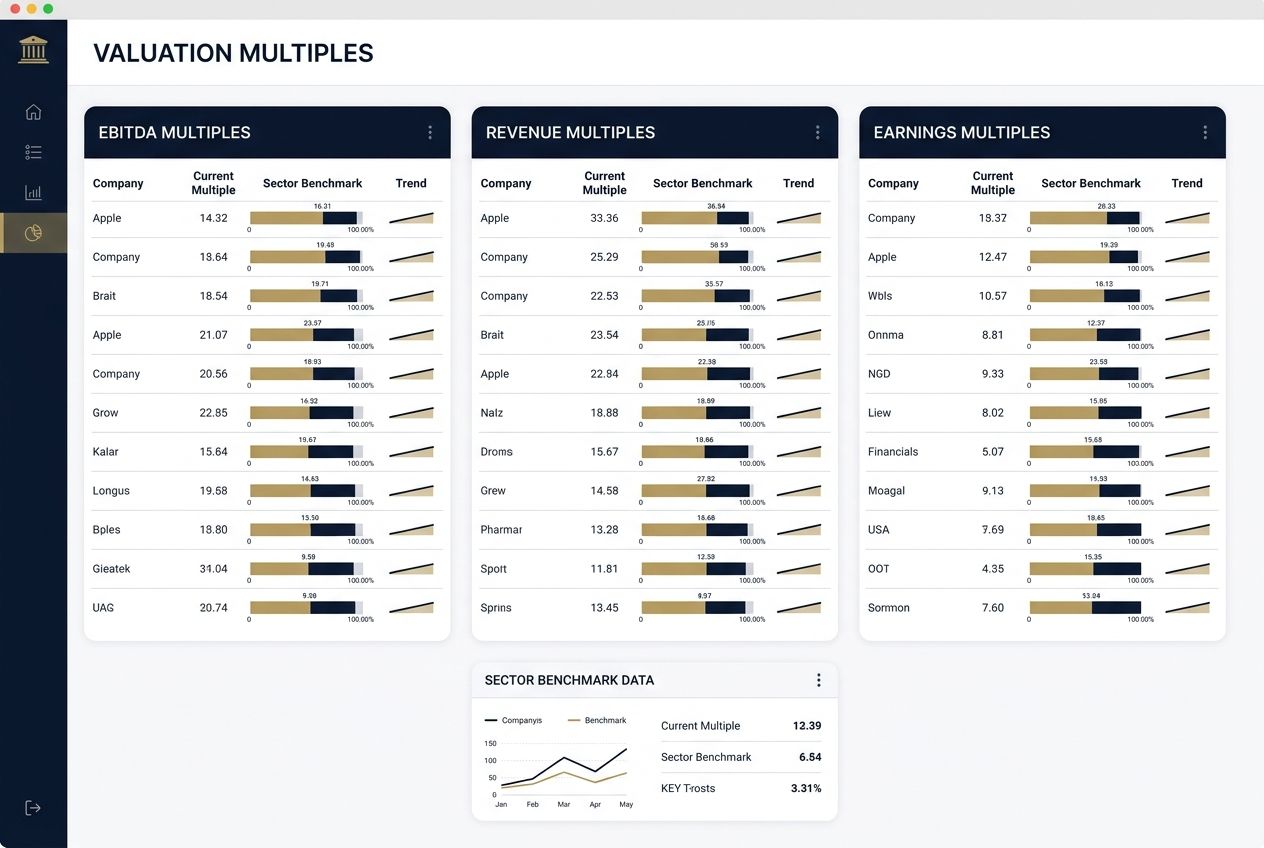
Enterprise value assessment based on operating cash flow proxies.
P/E ratio analysis adjusted for private company risk factors.
Analysis of earnings before interest and taxes relative to enterprise value.
Comparison of market value to net asset value for equity valuation.
Top-line valuation for high-growth or early-stage entities.
Seller's Discretionary Earnings analysis for small-to-mid enterprises.
Analysis of control premiums and deal structures sourced from our proprietary database.
Cost of Capital & Discount Rate (Ch. 20-28)
Derivation of discount rates and terminal growth assumptions using CAPM and build-up models.
Calculation of the incremental return required over risk-free rates.
Weighted average cost of capital (WACC) component analysis.
Sustainable growth rate modeling based on retention and ROE.
Terminal value sensitivity and long-term inflation expectations.
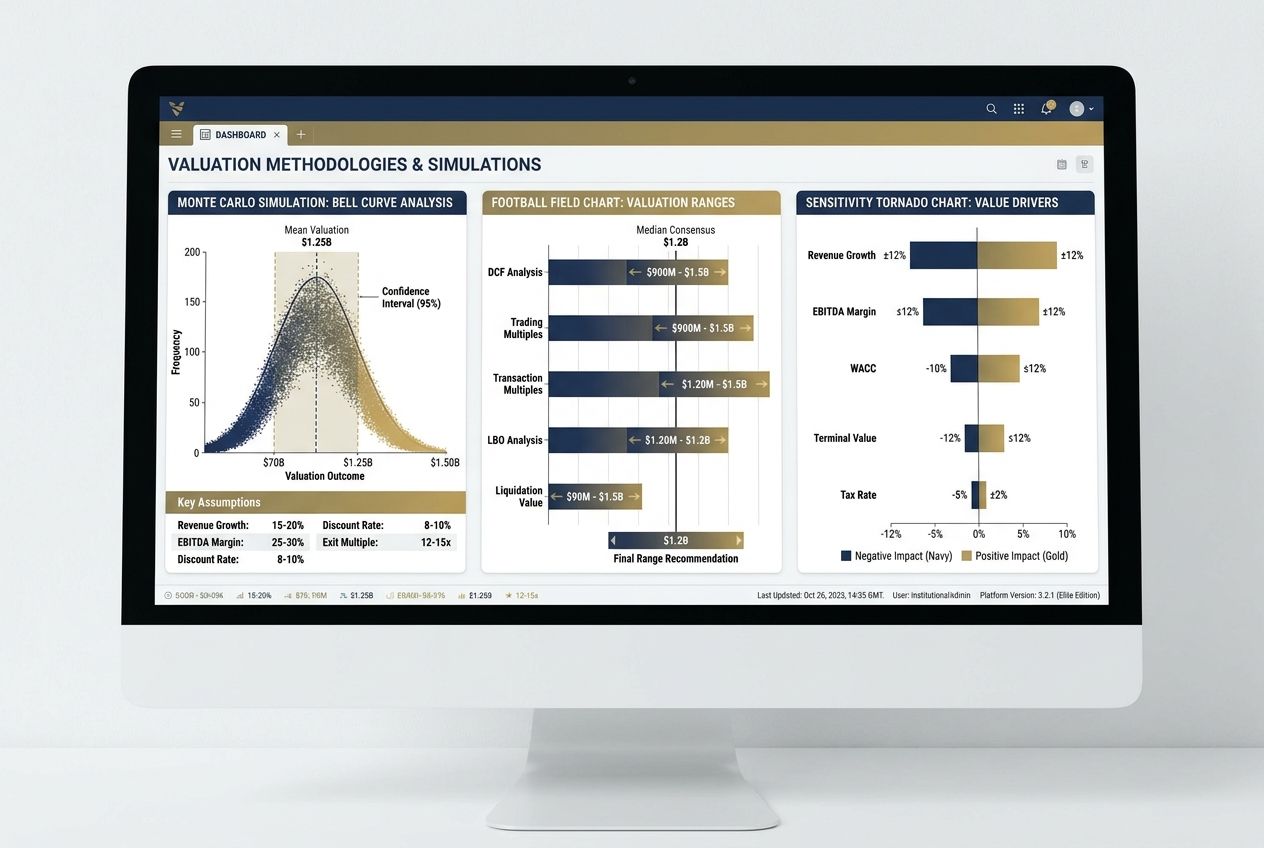
Intrinsic value calculation including: Goal-Seek Solver, Sensitivity Analysis, Tornado Chart, and Probabilistic DCF (Monte Carlo Simulation).
Algorithm to find optimal terminal value multiples for target IRR targets.
Multi-variable impact assessment on final enterprise value.
Identification and ranking of the most impactful valuation drivers.
Simulating 10,000+ valuation outcomes to determine confidence intervals.
Core Valuation Methods (Ch. 29-31)
Core valuation engine featuring multi-scenario models, heuristic audits, and probabilistic risk simulations.
Valuation based on a single period of maintainable earnings divided by a capitalization rate.
Sum-of-the-parts analysis evaluating the fair market value of tangible and intangible assets.
Strategic valuation using option pricing models for investment flexibility and multi-stage projects.
Startup & Early-Stage Valuation (Ch. 32-34)
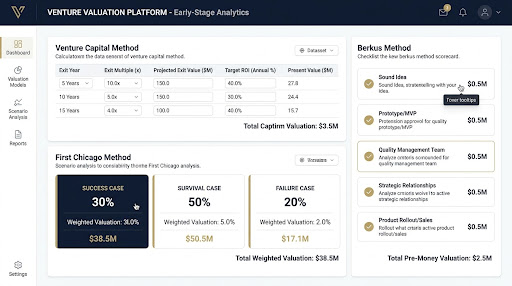
Specialized frameworks for early-stage ventures with limited historical data and high growth potential.
Valuation based on expected exit value and target ROI for early-stage investors.
A hybrid approach combining DCF and multiples across multiple scenarios (Success, Survival, Failure).
Quantitative assessment of early-stage startups based on five key success factors.
Compliance & Finalization (Ch. 35-40)
Final adjustments for marketability and minority interests, ensuring IVS and USPAP compliance.
Visual range of value across different valuation techniques.
Probabilistic modeling of 10,000+ valuation outcomes.
Sensitivity analysis identifying the most impactful valuation drivers.
Discount for Lack of Marketability based on restricted stock studies.
Option Pricing Method for complex capital structures.
Standard legal disclosures and scope of work limitations.
Bank-Grade Infrastructure
Your sensitive financial data is protected by multiple layers of encryption and compliance.
SOC2 Type II
Independently audited controls ensuring the highest standards of data security and operational reliability.
AES-256 Encryption
All data at rest and in transit is secured using military-grade cryptographic protocols.
GDPR & CCPA
Strict adherence to global privacy regulations and comprehensive data sovereignty management.

Technical Questions?
Connect directly with our elite analyst team. No bots. Just CFA expertise.